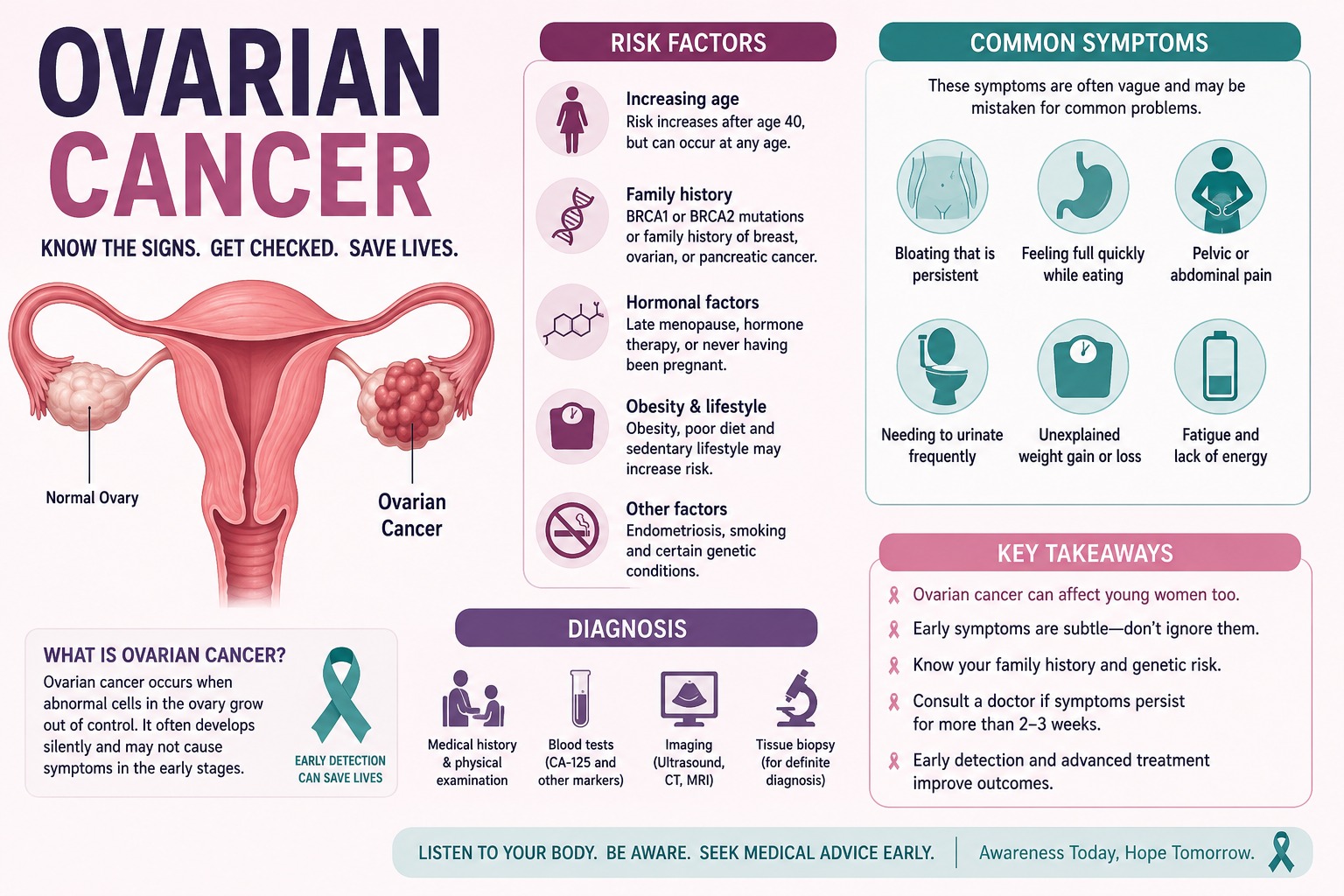
Ovarian cancer, once considered more common after menopause, is increasingly being diagnosed in younger women, highlighting the need for awareness and early recognition.
Changing Lifestyle & Reproductive Factors
Delayed childbirth, fewer pregnancies, obesity, sedentary lifestyle, and hormonal influences may contribute to changing patterns of ovarian cancer risk.
Genetic Predisposition Plays an Important Role
A significant proportion of young ovarian cancer cases may be linked to inherited genetic mutations such as BRCA1 and BRCA2. A strong family history of ovarian, breast, pancreatic, or prostate cancer should prompt genetic counseling.
Early Symptoms Are Often Subtle and Overlooked
Warning signs may include persistent abdominal bloating, pelvic or abdominal pain, feeling full quickly after eating, loss of appetite, frequent urination, unexplained weight changes, or fatigue.
Awareness Is Crucial Because Early Detection Is Challenging
Ovarian cancer symptoms can mimic common digestive or urinary problems, often leading to delayed diagnosis.
Young Age Does Not Exclude Cancer Risk
Persistent symptoms lasting more than a few weeks should not be ignored, even in young and otherwise healthy women.
Importance of Family History Assessment
Women with a family history of breast or ovarian cancer should discuss risk assessment, genetic testing, and personalized screening strategies with specialists.
Advances in Treatment Have Improved Outcomes
Modern surgery, targeted therapies, genetic testing, and personalized cancer treatment approaches are improving survival and quality of life.
Key Message: Listen to Your Body
Increased awareness, timely consultation, and appropriate evaluation can help diagnose ovarian cancer earlier and improve outcomes.