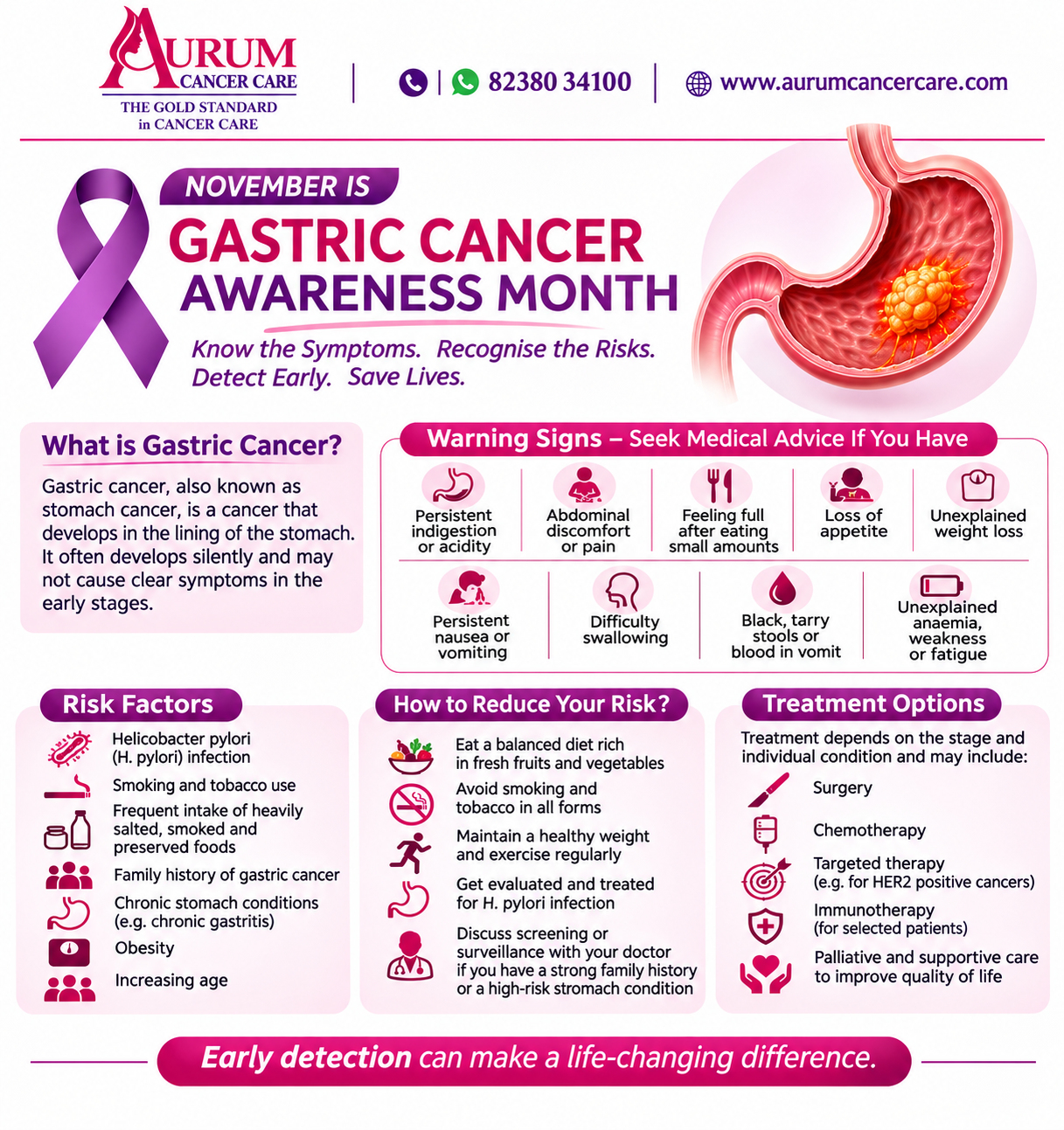
November is observed as Gastric Cancer Awareness Month, an opportunity to raise awareness about one of the most common cancers of the digestive system. Gastric cancer, commonly known as stomach cancer, often develops silently and may not cause noticeable symptoms during its early stages.
Increasing awareness about risk factors, recognising warning signs, and seeking timely medical advice can play an important role in early diagnosis and better treatment outcomes.
What is Gastric Cancer?
Gastric cancer occurs when abnormal cells begin to grow uncontrollably in the lining of the stomach. Over time, these cells can form a tumour and may spread to nearby organs or distant parts of the body.
Although gastric cancer is more commonly diagnosed in older individuals, it can also affect younger adults.
Know the Warning Signs
Early gastric cancer may not produce specific symptoms. However, certain symptoms should never be ignored:
- Persistent indigestion or acidity.
- Recurrent abdominal discomfort or pain.
- Feeling full after eating small amounts of food.
- Loss of appetite.
- Unexplained weight loss.
- Persistent nausea or vomiting.
- Difficulty swallowing.
- Black, tarry stools or blood in vomit.
- Unexplained anaemia, weakness or fatigue.
Important: These symptoms do not necessarily indicate cancer. However, persistent or unexplained symptoms require proper medical evaluation.
What Increases the Risk of Gastric Cancer?
Several factors may increase the risk of developing stomach cancer:
- Helicobacter pylori (H. pylori) infection: A major risk factor associated with chronic inflammation of the stomach lining.
- Smoking and tobacco consumption: Increase the risk of gastric cancer.
- Dietary habits: Frequent consumption of heavily salted, smoked and preserved foods may increase risk.
- Family history: Having close relatives with gastric cancer can increase individual risk.
- Chronic stomach conditions: Certain forms of chronic gastritis and gastric intestinal metaplasia are associated with increased risk.
- Obesity: Particularly associated with cancers involving the upper part of the stomach.
- Age: Risk generally increases with advancing age.
Can Gastric Cancer Be Prevented?
Although not all cases can be prevented, certain lifestyle changes may help reduce the risk:
- Eat a balanced diet rich in fresh fruits and vegetables.
- Reduce consumption of highly salted and preserved foods.
- Avoid smoking and tobacco in all forms.
- Maintain a healthy body weight.
- Exercise regularly.
- Seek medical evaluation and appropriate treatment for H. pylori infection.
- Discuss screening or surveillance with your doctor if you have a strong family history or a high-risk stomach condition.
How Is Gastric Cancer Diagnosed?
Early and accurate diagnosis is essential for planning appropriate treatment.
Common investigations include:
- Upper GI Endoscopy: The most important investigation for directly examining the stomach lining and identifying suspicious lesions.
- Biopsy: Tissue samples are examined under a microscope to confirm the diagnosis.
- CT Scan: Helps assess the extent of the disease and possible spread.
- Endoscopic Ultrasound (EUS): Helps evaluate the depth of tumour invasion and nearby lymph nodes in selected patients.
- Additional tests: HER2, PD-L1, MSI/MMR and other relevant molecular markers may help guide treatment decisions.
What Are the Treatment Options?
Treatment depends on the stage of cancer, tumour location, general health of the patient and molecular characteristics of the tumour.
Modern gastric cancer treatment involves a multidisciplinary team approach.
Treatment options may include:
1. Surgery
Surgery remains an important component of treatment for patients with resectable gastric cancer. Depending on the location and extent of the tumour, subtotal or total gastrectomy with appropriate lymph node dissection may be required.
2. Chemotherapy
Chemotherapy may be recommended before surgery, after surgery, or for advanced disease, depending on the clinical situation.
3. Targeted Therapy
Certain gastric cancers have specific molecular alterations, such as HER2 positivity, which may make targeted treatment beneficial.
4. Immunotherapy
Immunotherapy may be an option for selected patients based on tumour biomarkers and disease characteristics.
5. Palliative and Supportive Care
For advanced disease, treatment focuses on controlling symptoms, improving quality of life and prolonging survival wherever possible.
Why Is Early Detection Important?
When gastric cancer is diagnosed at an early stage, treatment outcomes are generally better, and the chances of successful curative treatment are higher.
Unfortunately, many patients are diagnosed at an advanced stage because early symptoms are often mistaken for routine acidity or indigestion.
Do not ignore persistent stomach problems. Do not delay medical consultation.
A Message from Aurum Cancer Care
This Gastric Cancer Awareness Month, let us spread awareness about stomach cancer and encourage people to recognise warning signs and seek timely medical advice.
Cancer awareness is not about creating fear. It is about creating knowledge, encouraging prevention and promoting early diagnosis.
Because early detection can make a life-changing difference.
Dr. Bhavana Parikh
Cancer Surgeon
AURUM CANCER CARE
The Gold Standard in Cancer Care